Why Garage Door Reliability Matters
A garage door is one of the hardest-working systems in any home. It opens and closes multiple times a day, often in all kinds of weather, and serves as both a security feature and an entryway. Yet most homeowners give little thought to its condition until something goes wrong. When a garage door fails, it’s rarely at a convenient moment — often when you’re late for work or returning home after a long day.
A garage door may seem simple, but it operates through a coordinated balance of tension, weight, and motion. Springs counterbalance the heavy panels, cables guide the movement, and the opener powers the entire mechanism. When even one of these components begins to wear down, the strain transfers to the rest of the system. Over time, small imbalances can grow into major problems. What starts as a squeak or a delay in closing can eventually become a door that won’t open at all.
Beyond inconvenience, a failing garage door can also pose real safety risks. A door that slams shut or falls unexpectedly can cause injury or damage property. Malfunctioning sensors can fail to detect movement, while worn cables or broken springs can create sudden, uncontrolled motion. Because garage doors often weigh hundreds of pounds, proper operation is essential not only for convenience but for safety.
Reliability also affects home efficiency. A door that doesn’t close tightly or has damaged seals allows drafts and moisture to enter, which can increase heating and cooling costs. In homes with attached garages, these leaks often impact the comfort of adjacent rooms. Regular upkeep ensures the door remains an effective barrier against outside temperatures, pests, and noise.
Another reason reliability matters is long-term value. A well-maintained garage door can last two decades or more, while a neglected one may fail within half that time. Preventive care — cleaning tracks, lubricating hardware, and testing safety features — preserves performance and prevents unnecessary wear. This maintenance also protects the investment in the opener and motor, which rely on balanced mechanics to operate correctly.
Many homeowners are surprised to learn that garage doors account for a large portion of the home’s exterior and can influence overall property value. A smooth, quiet, and secure door enhances curb appeal and contributes to a positive impression of the entire house. Conversely, a noisy or uneven door can signal neglect and even reduce perceived value during resale.
Ultimately, garage door reliability is about peace of mind. When every part functions as it should, you know your home is secure, your vehicles are protected, and your family can come and go safely. Like any other mechanical system, it requires consistent attention — not constant work, but the right kind of care at the right intervals.
At State Line Door & Lift, we’ve seen thousands of garage door problems — some minor, others catastrophic. The good news is that most failures are preventable with proper maintenance and attention to warning signs. By understanding what causes garage doors to break and learning how to address those causes early, homeowners can avoid costly repairs and enjoy smoother, safer operation for years.
The following are the five most common causes of garage door failure, along with expert advice on how to prevent each one.
Cause #1: Worn or Broken Springs
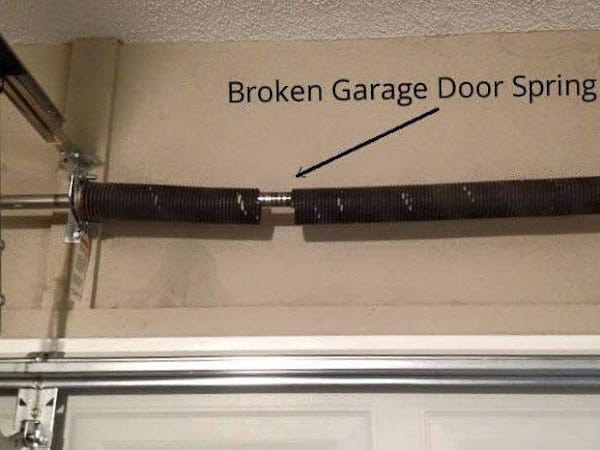
Springs are the backbone of every garage door system. They carry the weight of the door, helping it lift easily when opening and lowering gently when closing. When springs wear out or break, the door becomes heavy, unbalanced, or completely inoperable.
In most residential systems, there are two types of springs: torsion springs, which sit horizontally above the door, and extension springs, which run along the sides. Both types operate under intense tension, storing and releasing energy with each cycle. Over time, this constant stress causes metal fatigue. The coils weaken, and eventually, the steel can no longer hold its shape or balance the door’s weight.
Many homeowners don’t realize how much work their springs do each day. A single open-and-close counts as one full cycle, and since the average family uses their garage several times daily, wear accumulates quickly. Springs rated for 10,000 cycles may sound durable, but that translates to only a few years of frequent use. High-use households or heavier custom doors can shorten that lifespan even further.
Ignoring spring wear not only risks a breakdown but also adds strain to other parts of the system. The opener motor must work harder to lift the door, cables stretch unevenly, and tracks experience extra friction. These small imbalances create a ripple effect that leads to premature wear throughout the system.
Preventive care extends spring life significantly. Lubricating the coils reduces friction, while occasional visual inspections reveal rust, gaps, or loose fittings before they escalate. Homeowners should also listen for squeaks or creaks — early signs that lubrication is fading or tension is shifting.
When a spring finally fails, replacing it promptly is essential. Continuing to operate the door can damage the opener or bend the track assembly. Professional technicians use specialized tools to measure spring size, tension, and balance so the new springs match the door’s weight exactly.
At State Line Door & Lift, we always recommend replacing both springs simultaneously, even if only one breaks. This ensures balanced tension and smoother operation. Investing in high-cycle springs can also extend the lifespan of your system, especially for doors that see heavy daily use.
For homeowners who rely on their garage as the main entryway, well-maintained springs are key to keeping the system dependable and safe year-round.
Cause #2: Misaligned or Damaged Tracks
The tracks guide the door’s movement, allowing it to glide smoothly up and down. If the tracks become bent, misaligned, or obstructed, the door can jam or come off track entirely. Track problems are among the most common reasons homeowners call us for emergency repairs.
Garage door tracks work as the framework that directs motion. They keep the door panels aligned and balanced as they roll upward or downward. Each track is connected to brackets and fasteners that hold it in precise position. When these supports loosen, even slightly, the door begins to shift off-center. Over time, the imbalance increases until the door binds, drags, or slips free from its rollers.
Misalignment often starts subtly. A small bump from a vehicle, a buildup of dirt in the rails, or vibration from repeated use can nudge the tracks just enough to cause uneven movement. If ignored, the strain on rollers and hinges multiplies, making the opener motor work harder and increasing wear on other mechanical parts.
Corrosion and rust can compound the problem. As oxidation forms on the metal surface, the rollers can’t glide as easily, and the friction can grind away at the steel. In addition, debris such as leaves, pebbles, or hardened grease can obstruct motion, causing jerks or uneven travel.
Preventing these issues is straightforward with consistent upkeep. Keeping the area around the tracks clean, avoiding impacts from storage items, and checking bolts for tightness all help maintain alignment. Homeowners can run a quick test by disconnecting the opener and manually lifting the door halfway; if it resists or sticks, misalignment is likely.
Tracks should always be straight, smooth, and parallel to the door’s edges. Any bowing, denting, or outward tilt requires correction. Attempting to fix bent tracks without the proper tools can make the situation worse, as hammering or prying often twists the metal further out of shape.
Professional technicians use specialized gauges and levels to measure alignment precisely, ensuring both vertical and horizontal tracks match the door’s weight and motion. At State Line Door & Lift, we realign and reinforce tracks using precision tools to restore full function safely. Proper alignment reduces noise, prevents roller wear, and keeps your door operating quietly for years.
Cause #3: Faulty Garage Door Opener Systems
Modern garage door openers provide convenience, but they’re also a frequent source of failure. The opener motor, sensors, and electrical components must work in perfect coordination with the mechanical system. When any of these parts malfunction, the door may fail to open or close properly.
A garage door opener is essentially a small motorized system responsible for moving a heavy door that can weigh hundreds of pounds. Inside the motor housing, gears, drive chains, and electronic circuits all work together to ensure smooth motion. As these components age, they experience gradual wear. Plastic gears can strip, belts may loosen, and internal sensors may drift out of calibration. What begins as an occasional hesitation or clicking sound can evolve into a full breakdown if not addressed early.
One of the most common issues is sensor misalignment. Safety sensors prevent the door from closing on people or objects by using an infrared beam. If these sensors are dirty, blocked, or out of alignment, the door may reverse unexpectedly or refuse to close. Over time, dust buildup or minor bumps to the brackets can interfere with the beam’s connection.
Other common causes of opener problems include:
- Worn motor gears due to age or overuse.
- Loose wiring connections from vibration.
- Faulty remotes or keypad batteries.
- Improper limit settings that confuse the opener about where to stop.
Some failures can also stem from electrical issues such as power surges or lightning strikes. Because openers rely on circuit boards, a sudden jolt of current can fry delicate electronics, leaving the system unresponsive. Installing a surge protector or backup battery system can safeguard against unexpected outages.
Homeowners can prevent many opener issues through regular checks. Clean sensor lenses with a soft cloth, ensure nothing obstructs the beam, and replace batteries as needed. It’s also wise to test the door’s auto-reverse function monthly by placing a small object under the door — if it doesn’t reverse upon contact, call a technician immediately.
At State Line Door & Lift, a reputable garage door repair and installation company, we often upgrade older openers with modern smart systems that include built-in diagnostics, battery backup, and smartphone control. These upgrades enhance safety, reliability, and convenience while reducing the likelihood of sudden failure.
A malfunctioning opener can sometimes mimic other issues, such as a broken spring or jammed track. A professional inspection ensures the correct diagnosis and repair before more damage occurs.
Regular maintenance and small preventive measures can add years to an opener’s lifespan and help homeowners avoid the frustration of being stuck outside — or trapped inside — when the system fails.
Cause #4: Weather Damage and Poor Maintenance
Kansas City’s climate can be tough on garage doors. Heavy rain, snow, humidity, and temperature swings all take a toll over time. Wooden doors absorb moisture and warp; metal doors rust or lose paint; weather seals dry out and crack. Without maintenance, these small issues compound into major functional problems.
Weather-related wear affects both appearance and performance. Rusted hinges can seize, warped panels can strain the opener, and degraded seals let in drafts, pests, and water. Over time, even insulated doors lose efficiency as gaps develop around the frame.
One of the biggest challenges for any garage door is constant exposure. Unlike interior components of the home, a garage door faces the elements daily — sunlight, moisture, wind, and road debris. UV rays fade finishes and weaken paint layers, while fluctuating humidity causes expansion and contraction that loosen fasteners over time. Even well-built doors experience surface stress that can eventually affect structural alignment.
To prevent weather damage:
- Inspect and replace weather stripping annually.
- Touch up paint or protective coatings before corrosion spreads.
- Wash doors occasionally to remove dirt, salt, and grime.
- Lubricate all metal parts regularly to protect against rust.
It’s also helpful to ensure that gutters and downspouts near the garage are functioning properly. Water pooling near the base of the door accelerates rust on lower panels and corrodes bottom brackets. A small drainage adjustment can extend a door’s life by years.
If your garage door faces direct sunlight or frequent precipitation, consider upgrading to corrosion-resistant materials like aluminum, composite, or galvanized steel. These options hold up well in extreme weather and require minimal upkeep compared to traditional wood or painted steel. Many modern finishes also include UV inhibitors that prevent color fading and surface cracking.
Scheduling seasonal maintenance is another effective way to prevent damage. A professional technician can identify weak points, realign components, and apply protective treatments that prolong your door’s lifespan. Cleaning and sealing before each major weather season helps protect joints, insulation, and moving parts.
Neglecting maintenance often shortens a garage door’s life by years. Rust spreads, wood swells, and rollers begin to stick — all small issues that grow into costly repairs. Consistent attention keeps the system balanced and efficient.
At State Line Door & Lift, we recommend a biannual service check — once in spring and once before winter — to ensure every part operates smoothly through changing weather conditions.
Cause #5: Neglected Lubrication and Component Wear
Every garage door has dozens of moving parts working together — rollers, hinges, pulleys, bearings, and chains. Without lubrication, these components grind against each other, creating friction that leads to wear and eventual failure.
Lubrication is one of the simplest yet most overlooked forms of maintenance. When the metal-on-metal contact increases, the added resistance places stress on the motor, cables, and springs. Over time, this stress causes the system to work harder, drawing more power and accelerating fatigue in parts that are designed to move freely. A dry hinge or roller might seem minor, but in a system that weighs hundreds of pounds, even a small increase in friction can throw off the balance and alignment.
Kansas City’s dry winters and humid summers both contribute to lubrication problems. Cold air thickens old grease, while moisture can wash away or contaminate it. Over time, this leads to squeaking, jerking, and unnecessary strain on the opener and springs.
Proper lubrication keeps motion smooth, reduces noise, and extends component life. All pivot points, springs, and metal rollers should be lubricated every few months with a silicone or lithium-based spray designed for garage doors. Avoid using household oils or grease, which attract dust and gum up over time. The right lubricant provides a thin protective layer that shields moving parts from corrosion while maintaining flexibility in cold temperatures.
When applied correctly, lubrication also reduces vibration. Less vibration means fewer loose bolts and longer-lasting connections between the door panels and hardware. Many premature failures result from vibration fatigue — a problem that regular maintenance easily prevents.
Regular lubrication also serves as a quick inspection opportunity. If you notice rust, cracking, or worn parts, address them early. Replacing a worn roller or hinge costs little compared to the expense of replacing an entire door assembly. Taking a few minutes to inspect cables and brackets during lubrication ensures that no hidden damage goes unnoticed.
At State Line Door & Lift, we include lubrication as part of every service visit. Our technicians inspect the full system for signs of fatigue and make adjustments that restore balance and alignment. These small preventive steps help homeowners avoid the sudden, expensive breakdowns that catch most people off guard. A properly lubricated garage door not only performs better but also operates more quietly — a small but noticeable improvement in everyday comfort.
How to Prevent Failures Before They Happen
Preventive care is always easier — and cheaper — than repair. Garage doors rarely fail without warning. Noises, uneven motion, or slower operation all signal that something needs attention. Responding early keeps your door running safely and prevents damage from spreading.
The key to effective prevention is consistency. A garage door functions best when it’s treated like any other essential system in the home — one that needs small, regular checkups rather than large, expensive fixes. Most problems begin quietly: a bolt loosens, a spring loses tension, or dirt builds up on the tracks. These small issues often go unnoticed until they suddenly cause a breakdown. Routine inspection prevents those surprises and extends the life of every component.
Homeowners can take a few simple steps:
- Listen and observe. Any change in sound or movement is worth noting. Grinding, banging, or squeaking indicates friction or imbalance. A smooth door should operate quietly, without sudden stops or jerks.
- Inspect hardware. Tighten loose bolts, check hinges, and ensure cables aren’t fraying. Even a single loose screw can cause vibration that wears out parts faster.
- Clean regularly. Dust and grime add stress to tracks and rollers. Keeping these areas clear reduces resistance and helps the door move evenly.
- Test safety systems. Check sensors, auto-reverse functions, and emergency release handles monthly. These systems protect both the homeowner and the motor from damage.
- Schedule professional maintenance. A yearly inspection catches what the eye can’t — worn springs, fatigued cables, and subtle misalignments.
Preventive maintenance also saves time in the long run. A door that operates efficiently experiences less wear, requires fewer part replacements, and avoids major service disruptions. Homeowners who invest in regular maintenance spend less over time and enjoy more reliable performance.
Another benefit of consistent care is safety. Garage doors operate under high tension and use complex mechanisms that can become dangerous when neglected. Preventing a spring from breaking or a cable from snapping not only saves money but also reduces risk of injury.
Cleaning and lubricating parts regularly, checking for rust, and ensuring proper balance are all small habits that add up to years of dependable service. Most doors can last twenty years or more when maintained correctly — but without attention, that lifespan can be cut in half.
At State Line Door & Lift, we provide full preventive maintenance programs for homeowners. Our technicians adjust, lubricate, balance, and test all safety systems to ensure reliable performance year-round. With consistent care, most doors can last twenty years or longer, offering peace of mind, safety, and uninterrupted convenience every day.
When to Call a Professional
Some maintenance tasks are simple for homeowners, but others require professional skill and tools. Replacing springs, adjusting cables, or fixing track alignment can be dangerous without training. Attempting a repair with the door under tension can result in serious injury.
Call a garage door expert if:
- The door won’t open or close evenly.
- Springs or cables appear damaged.
- The opener hums but doesn’t move the door.
- The door has come off its track.
- You hear loud snaps, grinding, or sudden jerks.
At State Line Door & Lift, we provide 24/7 emergency service throughout Kansas City. Whether your door fails at night, during a storm, or in the middle of a workday, our team responds quickly to restore safety and function.
Professional technicians also ensure the repair lasts. We use high-quality replacement parts, apply precise tension adjustments, and test every component for proper operation before completing a job.
Protecting Your Garage Door Investment
Your garage door is more than just a convenience — it’s a mechanical system that protects your home, vehicles, and family. Understanding what causes failures and how to avoid them gives you control over its longevity. Springs, tracks, openers, and other components will wear out eventually, but with consistent care, you can prevent sudden breakdowns.
For Kansas City homeowners, preventive maintenance is especially important because of the region’s variable weather. Scheduling regular inspections, keeping parts lubricated, and addressing small issues early ensures your garage door runs smoothly season after season.
At State Line Door & Lift, our goal is simple: to keep your garage door safe, reliable, and efficient for years to come. From emergency repairs to scheduled maintenance plans, our team handles every aspect of service with professionalism and care. Contact us today to schedule your tune-up or inspection — because a well-maintained garage door is one you can count on every day.