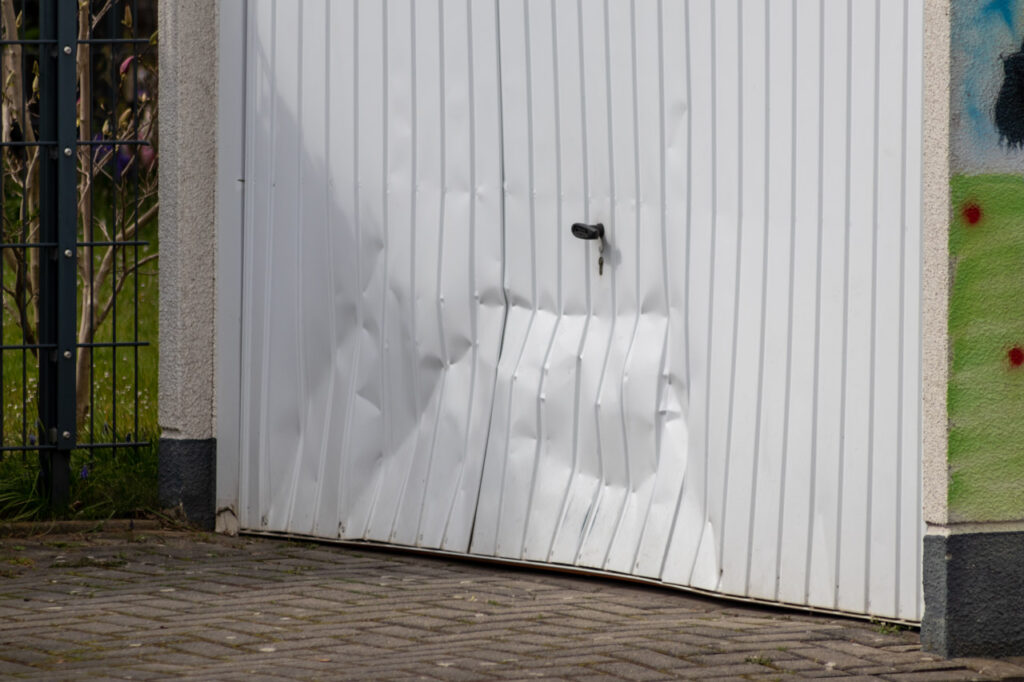
You back out of the garage in a hurry, misjudge the distance, and hear that sickening crunch of your bumper meeting your garage door. Or maybe you come home to find a baseball-sized dent in your garage door panel courtesy of last night’s hailstorm.
Damaged garage door panels are more than just eyesores—they can compromise your door’s operation, security, and energy efficiency.
At State Line Door & Lift, we see damaged garage door panels throughout Kansas City every week. Sometimes it’s obvious collision damage that needs immediate attention. Other times, it’s a gradual deterioration that homeowners have been ignoring, hoping the problem will somehow fix itself.
Here’s what we’ve learned from hundreds of garage door panel replacements: waiting too long to address panel problems usually makes them worse and more expensive to fix. A small dent that could be repaired or a single panel that needs replacement can turn into a full door replacement if you ignore the warning signs.
The good news is that individual garage door panel replacement is often possible and much more affordable than replacing your entire door. But you need to know what to look for and when to take action.
Your garage door panels do more than just look good. They’re structural components that work together to keep your door balanced, secure, and properly insulated. When panels are damaged, they affect the entire system’s performance.
Let’s look at four warning signs that indicate your garage door panel needs professional attention before the problem gets worse.
1. Visible Structural Damage That Affects Door Operation
The most obvious sign you need garage door panel replacement is visible damage that interferes with your door’s ability to open and close properly.
Structural damage goes beyond cosmetic issues—it affects how your panels connect to each other and move along the track system. When panels are bent, cracked, or separated, they create binding points that stress your opener motor and other components.
Types of structural damage to watch for:
Severe dents that create binding: Small dents are usually cosmetic, but deep dents can interfere with roller movement or panel connections. If your door hesitates or jerks during operation, dents may be causing mechanical problems.
Cracks that compromise panel integrity: Hairline cracks might seem minor, but they weaken the entire panel structure. Temperature changes cause cracks to expand and contract, gradually making them worse. Eventually, cracked panels can separate completely.
Bent or twisted panels: Impact damage from vehicles, storms, or accidents can bend panels out of their proper alignment. Bent panels create stress points that affect the entire door system and can damage tracks or rollers.
Separated panel joints: The connections between panels must maintain proper alignment for smooth operation. When joints separate or become loose, panels don’t fold correctly during operation, creating binding and uneven movement.
Panel warping from weather exposure: Wood panels especially can warp from moisture exposure, creating gaps in weather sealing and preventing proper door operation. Warped panels may not close completely or create uneven pressure on sealing systems.
How structural damage affects your door:
- Increased strain on opener motors leading to premature failure
- Uneven wear on rollers and tracks from binding and misalignment
- Poor weather sealing allowing moisture and air infiltration
- Security vulnerabilities from gaps or weak panel connections
- Safety risks from unpredictable door operation
When garage door repair makes sense vs. replacement: Minor structural damage can sometimes be repaired through panel straightening or reinforcement. However, severely damaged panels usually need complete replacement to restore proper operation and prevent further system damage.
Professional assessment importance: What looks like minor damage may indicate more serious structural problems. We evaluate how panel damage affects your entire door system and recommend the most cost-effective solution.
Safety considerations: Never operate a garage door with severely damaged panels. Structural damage can cause unpredictable operation that creates safety hazards for your family and property.
2. Weather Sealing Problems and Energy Efficiency Loss
Garage door panels work together to create a weather barrier that keeps moisture, drafts, and pests out of your garage. When panels are damaged or deteriorated, they compromise this essential protection.
Weather sealing problems often develop gradually, making them easy to overlook until they become expensive problems affecting your entire garage and adjacent living spaces.
Signs of weather sealing failure:
Visible gaps between panels: Properly functioning panels should create tight seals when the door is closed. Gaps allow air, moisture, and insects to enter your garage, reducing energy efficiency and creating comfort problems.
Light penetration around closed door: Stand in your garage with the door closed and lights off. Any light coming through panel joints or edges indicates sealing problems that need attention.
Water infiltration during storms: Water stains, puddles, or moisture buildup after rain or snow storms indicate that damaged panels aren’t providing adequate weather protection.
Increased dust and debris: If your garage accumulates more dust, leaves, or outdoor debris than usual, panel damage may be compromising your door’s sealing ability.
Temperature control problems: Attached garages with poor panel sealing affect your home’s energy efficiency. You may notice increased heating or cooling costs, or difficulty maintaining comfortable temperatures in rooms adjacent to the garage.
Panel-specific sealing issues:
Damaged weather stripping: The rubber seals along panel edges deteriorate over time or get damaged during impacts. Replacing the garage door panel may be necessary if sealing systems are integrated into panel construction.
Panel edge damage: Dents or cracks along panel edges prevent proper contact with adjacent panels or door frames, creating permanent gaps in the weather barrier.
Surface deterioration: Paint failure, rust, or material degradation can create rough surfaces that don’t seal properly against weather stripping and adjacent panels.
Insulation problems: Insulated panels that are damaged may lose their thermal properties, reducing energy efficiency even if the panel still functions mechanically.
Long-term effects of sealing problems:
- Increased energy costs from conditioned air loss
- Moisture damage to garage contents and structure
- Pest infiltration creating ongoing problems
- Reduced comfort in attached garages and adjacent rooms
- Potential for mold or mildew development from moisture infiltration
Cost of ignoring sealing problems: Poor weather sealing costs money every month through increased energy bills. The annual cost of energy loss often exceeds the cost of garage door panel replacement within a few years.
3. Security Vulnerabilities from Panel Deterioration
Your garage door panels are your home’s first line of defense against unauthorized entry. When panels are damaged or deteriorated, they create security vulnerabilities that criminals can exploit.
Modern garage door panel systems are designed to work together to create a strong barrier that resists forced entry. When individual panels are compromised, they become weak points that affect your entire door’s security.
Security-related panel problems:
Weakened panel material: Rust, rot, or impact damage weakens panel material, making it easier for criminals to break through. Even cosmetic damage can indicate underlying material weakness that compromises security.
Loose or damaged hardware: Panel connections, hinges, and mounting hardware must remain secure to maintain door strength. Loose hardware creates opportunities for forced entry through panel manipulation.
Compromised locking points: Many garage doors lock at multiple panel connection points. Damaged panels may not engage locking mechanisms properly, reducing security effectiveness.
Poor panel alignment: Damaged panels that don’t align properly may not engage with automatic locking systems or security hardware, leaving your garage vulnerable even when you think it’s secured.
Visibility into garage contents: Cracked or separated panels may allow criminals to see inside your garage, revealing valuable tools, vehicles, or equipment that make your home an attractive target.
How criminals exploit panel damage:
Leverage attacks: Criminals use crowbars or other tools to exploit weakened panel connections, separating panels to gain access.
Panel removal: Severely damaged panels may be removable without tools, providing easy access to garage contents and your home’s interior door.
Hardware manipulation: Loose or damaged panel hardware can be manipulated to defeat locking mechanisms or create entry points.
Force multiplication: Damaged panels concentrate stress at weak points, making it easier to create larger openings with minimal force.
Assessment of security risks: We evaluate how panel damage affects your door’s overall security and recommend solutions that restore protection for your family and property.
Upgrading security during replacement: Garage door panel replacement provides opportunities to upgrade to stronger materials, better hardware, and improved locking systems that enhance overall security.
4. Aesthetic Deterioration Affecting Home Value
While functionality and security are primary concerns, the appearance of your garage door panels significantly affects your home’s curb appeal and market value.
Garage doors are prominent features that visitors and potential buyers notice immediately. Damaged, faded, or deteriorated panels send negative messages about your home’s maintenance and care.
Aesthetic problems indicating replacement needs:
Paint failure and surface deterioration: Peeling, fading, or chalking paint makes panels look neglected and old. Bare metal or wood exposure accelerates deterioration and creates ongoing maintenance problems.
Rust stains and corrosion: Rust stains from panel hardware or material corrosion create unsightly discoloration that’s difficult to repair. Surface rust indicates deeper corrosion problems that compromise panel integrity.
Fading and color mismatching: Sun exposure and weather cause uneven fading that makes replacement panels obvious when mixed with existing ones. Uniform panel replacement may be necessary to achieve consistent appearance.
Multiple small damages: While individual small dents or scratches might not justify replacement, accumulated damage creates an overall appearance of neglect that affects property value.
Style obsolescence: Panel styles that were popular decades ago may now look dated and reduce your home’s appeal to modern buyers.
Impact on property value:
Curb appeal affects first impressions: Real estate professionals consistently identify garage doors as key elements in creating positive first impressions for potential buyers.
Return on investment: Garage door replacement typically returns 75-85% of investment in increased property value, making panel replacement a smart financial decision when selling.
Buyer perception: Well-maintained garage door panels suggest overall property care, while damaged panels raise questions about maintenance throughout the property.
Market competitiveness: Homes with attractive, well-maintained garage doors have advantages in competitive real estate markets.
Cost-effective appearance improvements:
Single panel replacement: When damage is limited to one or two panels, targeted replacement can dramatically improve appearance at reasonable cost.
Color coordination: Replacing damaged panels provides opportunities to update colors that better complement your home’s exterior.
Hardware upgrades: Combining panel replacement with decorative hardware upgrades creates custom appearances at modest additional cost.
Timing considerations for maximum impact: If you’re planning to sell your home within a few years, addressing panel problems now prevents emergency replacements during the selling process and ensures maximum visual impact.
When to Repair vs. Replace Garage Door Panels
Understanding when garage door panel replacement makes more sense than repair helps you make cost-effective decisions.
Factors favoring panel repair:
- Minor dents without structural damage
- Cosmetic damage not affecting operation
- Single panel issues on newer door systems
- Repair costs less than 50% of replacement cost
Factors favoring panel replacement:
- Structural damage affecting door operation
- Multiple panels showing similar wear patterns
- Panel age approaching door system lifespan
- Security or safety concerns from panel deterioration
Professional evaluation benefits: Experienced garage door repairmen can assess whether individual panel problems indicate broader system issues requiring comprehensive attention.
Cost Considerations for Panel Replacement
Understanding garage door panel replacement costs helps you budget appropriately and make informed decisions, but these are national averages that changes by region and by season, not our prices – so be sure to contact us for a free estimate for your property!
Individual panel replacement costs:
- Basic steel panels: $100-300 per panel
- Insulated panels: $150-400 per panel
- Premium materials: $200-500+ per panel
- Labor for replacement: $100-200 per panel
Factors affecting panel replacement cost:
- Panel material and construction quality
- Insulation and energy efficiency features
- Decorative elements and custom features
- Availability of matching panels for older doors
- Complexity of removal and installation
Multiple panel considerations: When several panels need replacement, complete door replacement may provide better long-term value than individual panel replacement.
Cost comparison strategies: We provide detailed cost comparisons between panel replacement and complete door replacement to help you choose the most economical approach.
Professional Panel Assessment and Service
Proper garage door panel replacement requires expertise in door systems, structural integrity, and safety procedures.
Our panel evaluation process:
- Complete assessment of door system condition
- Identification of panel problems and underlying causes
- Cost comparison between repair and replacement options
- Matching recommendations for existing door systems
- Safety evaluation of proposed solutions
Professional installation advantages:
- Proper panel alignment and hardware adjustment
- Integration with existing door components
- Safety testing and operational verification
- Warranty coverage on parts and labor
- Ongoing service and maintenance support
Quality assurance: Professional installation ensures panels function properly with your existing door system and maintain manufacturer warranty coverage.
When Panel Problems Indicate Larger Issues
Sometimes individual panel problems are symptoms of broader door system issues that need comprehensive attention.
System-wide problems affecting panels:
- Track misalignment causing uneven panel stress
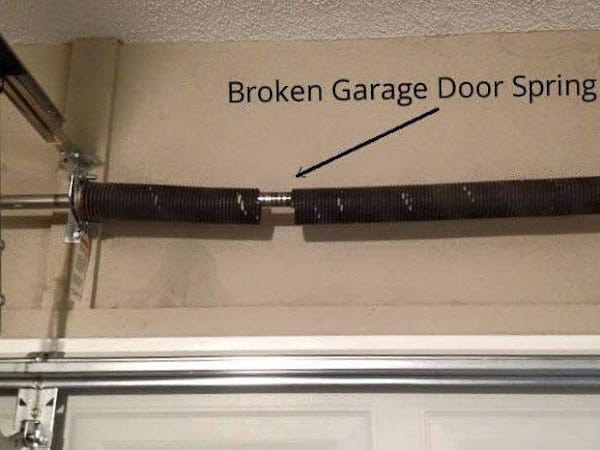
- Spring imbalance creating operational problems
- Foundation settlement affecting door frame alignment
- Age-related wear throughout door system
Professional system evaluation: We assess how panel problems relate to overall door condition and recommend solutions that address root causes, not just symptoms.
Ready to Address Your Panel Problems?
Don’t let damaged garage door panels compromise your home’s security, energy efficiency, or appearance.
At State Line Door & Lift, we specialize in garage door panel replacement throughout the Kansas City area. Our experienced technicians can assess your panel problems and provide cost-effective solutions that restore your door’s performance and appearance.
Our panel replacement service includes:
- Comprehensive evaluation of your door system
- Professional matching of replacement panels to existing doors
- Expert installation with proper alignment and adjustment
- Testing to ensure optimal operation and safety
- Warranty coverage on parts and labor
- Guidance on preventing future panel problems
Whether you need single panel replacement or are considering complete door replacement, we’ll help you choose the solution that provides the best value for your specific situation.
Call State Line Door & Lift at 816-616-8352 to schedule your panel assessment appointment. Let’s restore your garage door’s function, security, and appearance with professional panel replacement service.